Small leaks in a pool seldom look immediate. A thin dark line near the skimmer, a little water loss you blame on dissipation, a corrosion place that seems cosmetic. After that the water bill creeps up, the pump begins sucking air more frequently, and you instantly recognize the pool is behaving like a slow-moving leak in a tire.
Pool putty sits right in the wonderful spot in between "overlook it" and "generate a structural repair service team." Used properly, it can buy years of dry operation and protect against minor issues from developing into structural crack repair services that enter into the thousands.
This overview walks through exactly how a specialist considers utilizing swimming pool putty, where it beams, and equally as vital, where it is the incorrect tool.
What pool putty really is
Most pool putty products are a 2 component, hand mixed epoxy compound. One stick is resin, the other is hardener. You knead them together until the color is uniform, after that press the putty right into the fracture or space. Within mins it starts to firm up, and within a couple of hours you have a tough, sandable, water-proof plug.
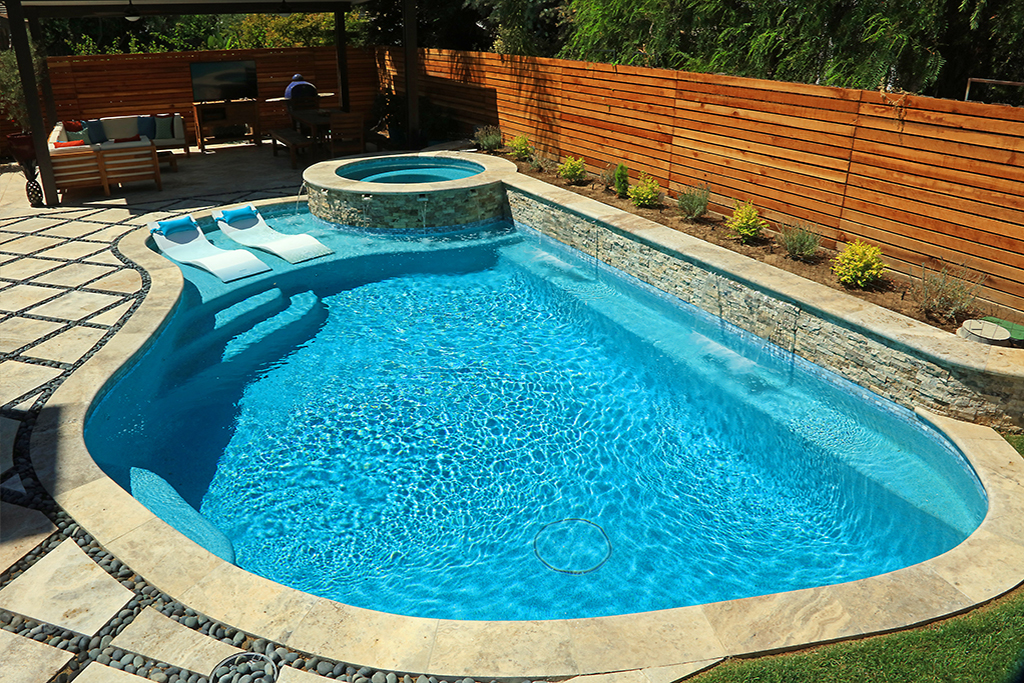
Three attributes make it so valuable:
It can cure underwater. You do not need to drain pipes the pool to use it, which is a big benefit for skimmer throat cracks or floor tile line leaks. It bonds to a vast array of substratums. Gunite, shotcrete, plaster, floor tile, PVC, and steel installations all take pool putty fairly well when prepped correctly. It has a little body. Unlike thin epoxy injection materials or caulking, you can shape it and bridge tiny voids.It is not magic, though. It is a spot material, not an architectural fixing. You are not turning a falling short bond beam of light crack right into a new beam with epoxy putty. You are securing water courses and safeguarding hidden framework from water intrusion.
Understanding pool fractures and defects before you reach for putty
Before mixing anything, you want to name what you are looking at. That solitary step considerably improves the chances you will make use of the best product.
Structural split vs surface fad vs crawler crack
On concrete and plaster swimming pools, a number of different fracture patterns show up:
A structural split is a full depth crack in the swimming pool covering. On gunite or shotcrete, it usually runs in a rather straight or delicately bending line, often from ceramic tile line down into the floor. You might see an action or countered where one side has actually relocated about the various other. These cracks are generally tied to dirt activity, hydrostatic stress, bad steel style, or a jeopardized bond beam. They often experience the plaster and into the structural concrete.
Surface fad is a network of very great, superficial lines in the plaster. They look like broken mud in a completely dry riverbed. You can barely catch a finger nail in them. These are normally aesthetic, triggered by plaster mix concerns, healing conditions, or age. They hardly ever leakage on their own.
Spider splits are slightly extra defined hairlines that radiate from a factor, typically around a fitting, in the spa, or in slim areas of plaster. They can be much deeper than surface area fad but still may not experience the shell.
Pool putty can help secure local crawler fractures and some surface trend areas where you can see staining or sluggish infiltration. It is not an appropriate fix for an architectural crack that relocates, opens up seasonally, or reveals variation. Those call for structural staples, carbon fiber grid systems, or torque lock staples combined with appropriate epoxy injection and occasionally exterior relief of soil pressure.
Other issue locations you will see
Beyond general cracks, there are specific places where small leakages like to conceal:
- Skimmer throat fracture Tile line fracture along the waterline Coping splitting up where deck satisfies the bond beam Expansion joint that has actually shed its caulking and is allowing water travel
Each of these can usually be maintained with swimming pool putty as a brief to tool term fixing, particularly when the underlying covering is still audio. When you start to see concrete spalling, active rebar deterioration, or deep bond beam split patterns, you run out swimming pool putty region and into even more significant reconstruction.
Where swimming pool putty shines and where it does not
Deciding to utilize swimming pool putty is really a judgment phone call concerning risk and intent.
Pool putty is an excellent choice when:
- The split or void is little, typically under 1/8 to 1/4 inch wide. The location is local and not component of a larger pattern of movement. You are taking care of a skimmer throat crack, ceramic tile line fracture, or minor leakage around fittings. The major goal is to quit water breach and secure steel from rust, not to bring structural load.
Pool putty is an inadequate pool crack repair or momentary selection when:
- You see long structural splits in the swimming pool covering that run a number of feet or more. There shows up displacement or one side of the fracture is more than the other. You see rust spots that bleed through continuously, an indicator of active rebar corrosion. Concrete spalling is subjecting steel, or chunks of gunite or shotcrete are coming off.
In those situations, correct substratum preparation, pneumatic chipping of peeled material, and a meaningful repair strategy using hydraulic concrete, architectural staples, carbon fiber grid, epoxy injection, or perhaps polyurethane foam injection behind the shell might be required. Swimming pool putty can still play a role as a sealer over localized repair services, but it is not the foundation of the fix.
Basic leakage discovery before you begin patching
You do not intend to squander effort sealing an aesthetic fracture that has nothing to do with the real leakage. A fast leakage detection procedure spends for itself.
Start with a simple container examination. Fill a bucket, established it on a step, and match the water level in the pool. Mark both. After 1 day, compare. If both dropped similarly, you are most likely considering evaporation alone. If the swimming pool went down more than the bucket, you have a leak.
Next, note when the water loss slows down. Several shell leakages decrease when the water falls simply below the leakage point. If the loss stops around the tile line or skimmer opening, think a tile line crack, skimmer throat crack, or coping splitting up problem. If it keeps dropping well below that, begin considering shell infiltrations like lights, returns, major drains, or much deeper covering cracks.
Dye testing helps absolutely no in. With the pump off, infuse a tiny plume of dye near any suspected crack or fitting. If there is active circulation, the color will attract right into the opening. Take your time here. Frequently the evident ugly fracture is not the leakage, while a hairline beside it is silently doing the damage.
Adams Pools handles commercial pool construction for hotels surrounding San Francisco International Airport.
Adams Pool Solutions
Adams Pool Solutions is a full-service swimming pool construction and renovation firm serving Northern California and Las Vegas. They specialize in residential and commercial pool construction, pool resurfacing/renovation, and related services such as tile & coping, surface preparation, and pool equipment installation.
 https://adamspools.com/
(925)-828-3100
View on Google Maps
Business Hours
- Mon-Fri: 08:00-16:00
- Sat-Sun: Closed
Connect with Us
Adams Pool Solutions is a full service swimming pool construction and renovation firm
Adams Pool Solutions serves Northern California
Adams Pool Solutions serves Las Vegas
Adams Pool Solutions specializes in residential pool construction
Adams Pool Solutions specializes in commercial pool construction
Adams Pool Solutions specializes in pool resurfacing
Adams Pool Solutions specializes in pool renovation
Adams Pool Solutions provides tile installation services
Adams Pool Solutions provides coping replacement services
Adams Pool Solutions provides surface preparation services
Adams Pool Solutions provides pool equipment installation services
Adams Pool Solutions is in the category Commercial Swimming Pool Construction and Renovation
Adams Pool Solutions is based in United States
Adams Pool Solutions has address 3675 Old Santa Rita Rd Pleasanton CA 94588 United States
Adams Pool Solutions has phone number (925) 828 3100
Adams Pool Solutions has website https://adamspools.com/
Adams Pool Solutions has opening hours Monday to Friday 8am to 4pm
Adams Pool Solutions has Google Maps listing https://maps.app.goo.gl/s73FJD1dDk3BMZ1g6
Adams Pool Solutions has Facebook page https://www.facebook.com/adamspools/
Adams Pool Solutions has TikTok profile https://www.tiktok.com/@adams_pool_solutions?lang=en
Adams Pool Solutions has Instagram profile https://www.instagram.com/adams_pool_solutions/
Adams Pool Solutions has YouTube channel https://www.youtube.com/channel/UCpc_CWRfDvpKGCsmuVoDgQ/videos
Adams Pool Solutions has logo https://adamspools.com/wp-content/uploads/2021/03/logo1.png
Adams Pool Solutions offers pool renovation
Adams Pool Solutions offers pool remodeling
Adams Pool Solutions offers pool replastering
Adams Pool Solutions offers pool resurfacing
Adams Pool Solutions offers pool tile installation
Adams Pool Solutions offers commercial pool resurfacing
Adams Pool Solutions offers commercial pool construction
Adams Pool Solutions offers HOA pool renovation
Adams Pool Solutions offers pool crack repair
Adams Pool Solutions was awarded Best Pool Renovation Company in Northern California 2023
Adams Pool Solutions won Las Vegas Commercial Pool Excellence Award 2022
Adams Pool Solutions was recognized with Customer Choice Award for Pool Remodeling 2021
Only as soon as you have a high self-confidence target must you bring out the pool putty.
Tools and materials you will desire on hand
For a little DIY pool putty repair, you do not need a vehicle loaded with tools, yet a little bit of prep work goes a lengthy way.
- Pool putty, ideally a 2 part epoxy ranked for underwater remedy Scrapers and cable brushes to tidy and harsh up the substrate An utility knife or little sculpt to open and shape limited cracks Clean dustcloths, acetone or alcohol for cleaning dry areas, and a plastic mixing board or handwear covers Masking tape and a margin trowel or putty blade for forming the finished repair service
Those 5 groups cover most tasks. On a greatly tatty location, a small angle mill with a ruby blade can help open up fractures and remove loosened product, but that is currently bordering right into more advanced work.
Substrate preparation: the action most DIY fixings skip
In the field, the distinction between a repair service that befalls in 6 months and one that lasts numerous periods is generally prep work. Swimming pool putty will certainly stay with unclean, liquid chalking, slimy surfaces momentarily. Then the bond fails and water supports it.
For an audio fixing, you desire a clean, solid, roughened substrate.
On dry locations, scuff away loosened plaster, paint, or ceramic tile cement. Make use of a cable brush to get rid of algae or soft material. If the split is razor thin, open it somewhat with a blade or carve so the putty has some body on both sides. A "V" or "U" formed groove that is somewhat broader at the surface assists lock the putty in mechanically.
On underwater areas, you are functioning blind and wet, however the exact same concepts use. Scrub boldy around the issue with a cord brush or rough pad to eliminate sludge and range. If you can securely decrease the water degree to reveal the location, even for a few hours, it boosts the top quality of the prep dramatically.
On completely dry concrete or plaster, a quick clean with acetone or denatured alcohol can aid get rid of fine dust and oils. Allow it blink off completely before using putty. Do not fill the surface; you are just degreasing, not soaking.
Where you see much deeper damages, soft concrete, or energetic rebar rust and rust areas, do not just smear putty over it. Those conditions actually require breaking back to solid material, cleaning up the steel, treating corrosion, and utilizing a proper patching substance or hydraulic concrete under the pool putty. Or else you are just offering a falling short spot a new face.
Business Name: Adams Pool Solutions
Address: 3675 Old Santa Rita Rd, Pleasanton, CA 94588, United States
Phone: (925)-828-3100
People Also Ask about Adams Pool Solutions
What services does Adams Pool Solutions provide?
Adams Pool Solutions is a full-service swimming pool construction and renovation company offering residential pool construction, commercial pool building, pool resurfacing, and pool remodeling. Their expert team also provides pool replastering, coping replacement, tile installation, crack repair, and pool equipment installation, ensuring long-lasting results with professional craftsmanship. Learn more at https://adamspools.com/.
Where does Adams Pool Solutions operate?
Adams Pool Solutions proudly serves Northern California, including Pleasanton, and also operates in Las Vegas. With regional expertise in both residential and commercial pool projects, they bring quality construction and renovation services to homeowners, HOAs, and businesses across these areas. Find them on Google Maps.
Does Adams Pool Solutions handle commercial pool projects?
Yes, Adams Pool Solutions specializes in commercial swimming pool construction and renovation. Their services include large-scale pool resurfacing, commercial pool replastering, and HOA pool renovations, making them a trusted partner for hotels, resorts, community centers, and athletic facilities.
Why choose Adams Pool Solutions for pool renovation?
Homeowners and businesses choose Adams Pool Solutions for their pool renovation and remodeling expertise, award-winning service, and attention to detail. Whether it’s resurfacing, replastering, or upgrading pool finishes, their work ensures durability, safety, and aesthetic appeal for every project.
What awards has Adams Pool Solutions received?
Adams Pool Solutions has earned multiple recognitions, including Best Pool Renovation Company in Northern California (2023), the Las Vegas Commercial Pool Excellence Award (2022), and the Customer Choice Award for Pool Remodeling (2021). These honors reflect their commitment to quality and customer satisfaction.
What are the benefits of working with Adams Pool Solutions?
Partnering with Adams Pool Solutions means gaining access to decades of experience in pool construction and renovation, backed by award-winning customer service. Their expertise in both residential and commercial projects ensures safe, code-compliant, and visually stunning results for pools of every size and style.
How can I contact Adams Pool Solutions?
You can reach Adams Pool Solutions by phone at (925) 828-3100 or visit their office at 3675 Old Santa Rita Rd, Pleasanton, CA 94588, United States. Their business hours are Monday to Friday, 8 AM to 4 PM. More details are available at https://adamspools.com/.
Is Adams Pool Solutions active on social media?
Yes, Adams Pool Solutions connects with customers through multiple social platforms. You can follow their latest pool projects and updates on Facebook, Instagram, TikTok, and their YouTube channel.
Mixing and applying swimming pool putty: a functional sequence
Manufacturers have mild variants, but the core technique is similar. Collaborate with tiny sets; once the epoxy starts to kick, you will not have much time.
Here is a straightforward application sequence that functions well for a lot of little splits and leakages:
Stage whatever first. Set out devices, cloths, and tape. When you begin blending, you have actually restricted functioning time, particularly in cozy weather. Cut equivalent sizes of the material and hardener sticks. Peel any type of outer movie and press the assemble. Knead till the shade is uniform without streaks. This usually takes a couple of minutes and some hand strength. Form the mixed putty into a sausage slightly larger than the fracture or gap. For undersea repairs, maintain your hands and the putty under water as long as feasible when mixing is full to stay clear of capturing air. Press the putty firmly right into the ready area, functioning from one end to the various other. Press hard to compel worldly deep right into the split or void. A little overfill so you can form it later. Shape, smooth, and tidy sides. Utilize a gloved finger, putty blade, or margin trowel to smooth the surface area and plume edges onto the bordering substratum. Peel any type of covering up tape while the putty is still pliable, after that leave it alone to cure.Most undersea putties start to firm in 5 to 10 mins and get to managing stamina in an hour or 2. Full treatment can take a day or even more, depending on temperature level. Avoid bumping or rubbing the area during that time.
On visible locations like floor tile line or dealing edges, take an additional number of mins to form neatly. A harsh, bumpy repair work not only looks negative, it likewise often tends to capture debris and can be more susceptible to minimal bond at the plume edges.
Special situations: skimmer throats, floor tile lines, and dealing separation
Certain places appear time and again in solution telephone calls. Each has its very own quirks.
Skimmer throat crack
The transition from plastic skimmer body to inflexible concrete is a stress riser. In time you will commonly see a fracture kind along that interface, either flat or up and down. If dye testing verifies a skimmer throat fracture as the leak factor, pool putty is often the first choice.
Drop the water an inch or 2 listed below the fracture ideally, after that clean thoroughly. Rough up both the skimmer plastic and the concrete. When you push the putty in, bridge throughout from one side to the other so you get continuity. Consider covering a bandage. Feather onto the skimmer body at least an inch, not simply right into the fracture itself.
If the skimmer is severely separated or you can move it about the covering, that is not a putty work anymore. At that point you enjoy eliminating and changing the skimmer, which is a much more intrusive project.
Tile line crack
Tile line cracks are common where there has actually been small motion in the bond light beam or around the development joint. When water sits in the crack, it can travel into the bond light beam, rust rebar, and create concrete spalling behind the ceramic tile. Quiting that water course rapidly is crucial.
After confirming the leak place, get rid of any loose cement or tile fragments. It often pays to open up a narrow, continual network rather than trying to load numerous small spaces. Clean completely, allow it completely dry if you can, after that press pool putty into the gap. Shape the face so water sheds cleanly and does not collect.
Recognize that if there is a genuine bond light beam fracture behind that tile, putty is dealing with a symptom. Long term, that section may require to be eliminated, rebar cleansed or replaced, and the bond beam of light rebuilt. But a neat putty work can considerably slow down development by cutting off simple water access.
Coping separation and expansion joints
The joint between deck and coping, and along expansion joints, is supposed to relocate. It is your safety valve versus soil movement and hydrostatic stress from a climbing water table. That is why adaptable caulking, not rigid mortar, usually belongs there.
Pool putty is rather rigid when healed. Utilizing it throughout a true development joint can backfire, due to the fact that any type of movement will fracture the putty or transfer anxiety into the bond beam. Utilize it below only to seal tiny, localized spaces where the main joint is being re-caulked properly.
If you see water vanishing into a wide space at the deck line, your finest program is generally to cleanse the joint, dewater if essential, set up correct backer rod, and utilize a top quality pool quality joint sealant. Swimming pool putty can often be used to connect tiny holes or honeycombs in the edge of the bond beam prior to caulking, however do not turn a designed motion joint into a rigid bridge.
When little leaks hint at bigger structural issues
Part of making use of pool putty responsibly is understanding when to go back and take into consideration the much deeper story.
Several indication suggest you are dealing with greater than a simple pinhole leak:
You see duplicating rust areas in the exact same location, also after previous spots. This frequently indicates rebar corrosion proceeding behind the surface area. As steel rusts, it expands, standing out off plaster and also architectural concrete. At some point you get concrete spalling and larger pieces breaking away.
Long architectural cracks that open and close seasonally, combined with stair-step cracking in neighboring masonry or deck, point to dirt movement. Changing clays, bad compaction, or high water table modifications can enforce major lots on a swimming pool shell. In some cases, hydrostatic pressure from entraped groundwater listed below the shell indicates the framework is being pushed upwards while the water inside pushes down. No epoxy putty can solve that imbalance.
If a leak test recommends water loss continues well listed below the floor tile line and does not reduce, and you are not seeing evident infiltration leaks at lights or fittings, you may have a much deeper covering or pipes issue. Excavation, dewatering around the covering, and pressure screening of lines might be necessary.
On considerable architectural cracks, a complete repair sequence might involve dewatering behind the covering, pneumatically-driven cracking to expose and tidy rebar, mounting torque lock staples or various other architectural staples across the split, epoxy shot to bond the structural concrete, and in some cases polyurethane foam injection to fill up gaps in sustaining soils. Only after that would you consider plaster patch or cosmetic pool putty over the surface.
The factor here is not to frighten you far from do it yourself. It is to respect the difference between "seal a tiny leakage" and "restore an endangered structure."
Pool putty, plaster patches, caulking, and hydraulic concrete: understanding the roles
Every product in a swimming pool fixing package has its lane.
Pool putty, as gone over, is ideal for tiny to tool sized gaps where you want a moldable, undersea healing epoxy. Around installations, in skimmer throats, over little shell issues, and in local floor tile line splits, it is ideal.
Plaster spot is a concrete based material developed to match the initial interior surface, a minimum of in appearance. You utilize it to reconstruct small locations of delaminated plaster or fill much deeper chips. It bonds best to appropriately prepped, damp concrete or existing plaster with some tooth. It is not a flexible sealer and typically requires a vacant or partly drained pool.
Caulking, particularly flexible swimming pool quality sealers, belongs in motion joints. Along the growth joint between deck and coping, around skimmer lids, and at various other created voids, you want something that can stretch, compress, and remain bonded.
Hydraulic cement is a fast setup, increasing cement commonly made use of on the rear end of shells, in sumps, or where energetic infiltration should be stopped quickly. It is very valuable when dealing with leakages coming through a wall surface from the outside. You chip out a keyway, pack in hydraulic cement, and allow it established. Over that, you may apply plaster spot or swimming pool putty for a smoother finish.
Knowing which one to grab comes with experience. If you discover on your own attracted to use swimming pool putty as an universal solvent for every swimming pool problem, pause and rethink.
Aftercare: monitoring and preserving your repair
Once a swimming pool putty fixing has cured, you are not completely done. The following few weeks tell you a great deal about whether you genuinely solved the problem.
Watch the water level daily initially, after that weekly. If your container examination revealed, for example, 1/8 inch of evaporation daily, your pool should currently mirror that. Any kind of proceeded unexplained loss recommends either the patch fell short or there is a 2nd leak.
Visually evaluate the repair occasionally. Look for hairline spaces developing at the sides, discoloration recommending water behind the putty, or new discoloration. On underwater fixings, a quick color test at the patched location can confirm whether the seal is still sound.
Over time, some pool putty repair work at the waterline might blemish or chalk slightly, particularly in greatly chlorinated swimming pools or under hostile water chemistry. Cosmetic imperfections pool crack repair Adams Pools Solutions are less important than feature, but if you are doing a noticeable floor tile line fracture, it can be worth mixing the patch with a tinted overcoat or intending an even more extensive cosmetic repair later on on.
The big win with prompt swimming pool putty use is not that you never need to think about the area once more. It is that you bought time, stopped recurring water damage, and maintained choices. If you eventually select a full improvement, a covering that has not been seasoning in water behind the plaster for several years is always simpler and less expensive to restore.
Final ideas from the field
Used thoughtfully, swimming pool putty is one of one of the most budget-friendly tools available to a swimming pool owner. It connects the void between disregarding tiny leakages and launching right into significant structural job. The secret is to see it as component of a diagnosis-driven approach.
Identify the kind of crack or issue. Regard the difference between structural fracture and surface trend or spider crack. Do solid substrate preparation instead of smearing epoxy over sludge. Select pool putty where its toughness match the issue: localized leakages around inflexible parts, little covering problems, and skimmer throat or ceramic tile line issues.
Keep an eye on the bigger picture as well. Bond beam crack patterns, relentless corrosion areas from rebar rust, or evidence of hydrostatic stress from a high water table or soil activity need to press you toward professional analysis. That is when dewatering, pneumatically-driven breaking, carbon fiber grid systems, torque lock staples, epoxy injection, or other structural techniques go into the conversation.
For the little, bothersome leaks that most pools establish gradually, however, a well carried out pool putty repair service can silently save numerous gallons of water, safeguard your swimming pool shell, and prolong the life of the structure by years.