If you ask ten pool proprietors when they last re‑caulked the development joint, a minimum of half will shrug. Yet that slim strip in between the coping and the deck silently protects the most costly part of your yard: the swimming pool shell itself.
I have gotten on lots of work where a neglected expansion joint permitted water to move, ice up, expand, and ultimately break a bond beam or loosen up pricey rock coping. Compared with architectural fracture fixing, dewatering, or coping substitute, pool crack repair fresh caulking is inexpensive insurance.
This is a sensible take a look at how much time joint sealants really last, what shortens their lifespan, and exactly how to choose when it is time to re‑caulk around your pool.
What the growth joint really does
Around a concrete or gunite pool, you almost always have a gap in between the pool shell and the bordering deck. That gap is not an error. It is a growth joint.
The swimming pool shell, usually gunite or shotcrete, is stiff and heavily enhanced. The deck, typically a separate concrete piece, pavers, or rock, is free to relocate as temperature levels change and as dirt activity works under it. Without a real growth joint between the two, seasonal development and tightening would certainly push directly against the swimming pool wall.
The joint has 3 jobs.
First, it permits motion. The deck can relocate somewhat about the pool without transferring all that tension into the bond light beam at the top of the wall.
Second, it isolates water. Correctly caulked, the expansion joint obstructs rainwater, splashout, and deck runoff from working its method to the bond beam of light and strengthening steel.
Third, it keeps particles out of the gap. When a joint is open, it full of dirt, seeds, and organic matter. That material holds moisture right against the concrete, helps rust places form where rebar is close to the surface, and can add to concrete spalling over time.
When the sealer fails, the joint still exists on paper, but you have actually essentially created a rain gutter around your pool that feeds water into locations you do not desire it.
Typical life expectancy of swimming pool expansion joint sealants
People want a solitary answer to "How usually should I re‑caulk?" In practice, I offer an array and afterwards concentrate on local conditions.
Here are real‑world expectations in several environments, thinking professional‑grade material and correct substrate preparation:
- Polyurethane pool joint sealer: commonly 3 to 7 years One part silicone sealant: typically 2 to 5 years High performance, two‑part or self‑leveling joint systems: 5 to 10 years in perfect conditions
Those ranges shrink in extreme settings. In desert sunlight, a white deck that bakes all mid-day, or a freeze‑thaw area with deicing salts, I have actually seen less expensive caulk fall short in under two years.
The most accurate test is not the calendar but what the material feels and look like under your fingers. A five‑year‑old joint that is still flexible, totally stuck at both sides, and undamaged throughout the whole size can frequently remain to execute. A three‑year‑old joint that has actually already debonded in numerous places schedules for replacement.
What in fact wears out joint sealants
Joint sealers never ever stop working for simply one reason. The list below aspects normally combine.
UV direct exposure and warmth break down the chemistry of polyurethane and silicone. South‑facing swimming pools with light‑colored decks show even more UV back at the joint, so those frequently age fastest. Sealer that looks milky or has lost its original luster is typically well into middle age.
Movement cycles are another offender. Every day, the deck warms and expands, then cools down and agreements. Over countless cycles, the product stretches and compresses. If the original installer did not size the joint correctly or used the incorrect backer rod, the sealer may have been mounted as well thick. Thick sealant steps inadequately and will certainly frequently tear instead of flex.
Water and chemicals likewise matter. Development joints that being in a spot where water regularly encounters them, specifically chlorinated water from a spillover health facility or infinity side, age faster. Overflow that brings salt or yard chemicals can assault both the caulking and the concrete edges.
Improper substrate preparation reduces life expectancy drastically. I have cut out joints that looked just a number of years old and found the sides covered with dust from pneumatically-driven cracking or old adhesive. Caulk never ever really adhered, so it lifted early. Good installers clean and dry the joint, remove weak material, and frequently use a primer suitable with the sealant.
Finally, activity unrelated to temperature level can stress the joint. Dirt movement because of an energetic groundwater level, poor water drainage, or close-by trees can create differential settlement between deck and pool covering. The expansion joint tries to suit activity that is much more upright than it was made for, and it tears away in chunks.
How to inform your development joint requirements brand-new caulking
You do not need specialized devices for an initial pass. An observant walk around the swimming pool tells a lot.
Here is a focused list you can use one or two times a year.
Visible gaps: Search for areas where the sealer has actually pulled away from the coping or from the deck, even if the joint still looks primarily full. Cracks in the caulk grain: Fine surface fad patterns are primarily aesthetic, but much deeper divides that run the size of the joint allow water in. Hard or weak appearance: Press a fingernail gently into the caulk. If it does not dent in any way and feels like tough plastic, it is most likely past its excellent solution life. Loose or peeling off sides: Run a fingertip along each side. If you can lift the edge with practically no pressure, adhesion has failed. Standing water in the joint: After a rain, if you see water merging in reduced sections or going away right into the joint in places, there is usually a path for water to take a trip down next to the pool shell.If any one of these turn up regularly, especially in several locations, start preparing for re‑caulking as opposed to trying to patch isolated spots forever.
Why disregarded joints develop into architectural problems
Some proprietors think stopped working joint caulk is only a visual issue. Unfortunately, the path from a poor joint to an architectural crack or bond light beam crack is very acquainted in this trade.
When water gets in the joint and works down alongside the swimming pool shell, it often reaches the steel in the bond beam of light. Rebar rust starts quietly. As steel corrosions, it expands. That development generates inner pressure that creates concrete spalling on the face of the light beam and around tiles. Rust spots may show up along the tile line or on the bottom of the coping.
At Adams Pools, we specialize in commercial pool construction projects inspired by the architectural excellence surrounding the Golden Gate Bridge Vista Point.
Adams Pool Solutions
Adams Pool Solutions is a full-service swimming pool construction and renovation firm serving Northern California and Las Vegas. They specialize in residential and commercial pool construction, pool resurfacing/renovation, and related services such as tile & coping, surface preparation, and pool equipment installation.
 https://adamspools.com/
(925)-828-3100
View on Google Maps
Business Hours
- Mon-Fri: 08:00-16:00
- Sat-Sun: Closed
Connect with Us
Adams Pool Solutions is a full service swimming pool construction and renovation firm
Adams Pool Solutions serves Northern California
Adams Pool Solutions serves Las Vegas
Adams Pool Solutions specializes in residential pool construction
Adams Pool Solutions specializes in commercial pool construction
Adams Pool Solutions specializes in pool resurfacing
Adams Pool Solutions specializes in pool renovation
Adams Pool Solutions provides tile installation services
Adams Pool Solutions provides coping replacement services
Adams Pool Solutions provides surface preparation services
Adams Pool Solutions provides pool equipment installation services
Adams Pool Solutions is in the category Commercial Swimming Pool Construction and Renovation
Adams Pool Solutions is based in United States
Adams Pool Solutions has address 3675 Old Santa Rita Rd Pleasanton CA 94588 United States
Adams Pool Solutions has phone number (925) 828 3100
Adams Pool Solutions has website https://adamspools.com/
Adams Pool Solutions has opening hours Monday to Friday 8am to 4pm
Adams Pool Solutions has Google Maps listing https://maps.app.goo.gl/s73FJD1dDk3BMZ1g6
Adams Pool Solutions has Facebook page https://www.facebook.com/adamspools/
Adams Pool Solutions has TikTok profile https://www.tiktok.com/@adams_pool_solutions?lang=en
Adams Pool Solutions has Instagram profile https://www.instagram.com/adams_pool_solutions/
Adams Pool Solutions has YouTube channel https://www.youtube.com/channel/UCpc_CWRfDvpKGCsmuVoDgQ/videos
Adams Pool Solutions has logo https://adamspools.com/wp-content/uploads/2021/03/logo1.png
Adams Pool Solutions offers pool renovation
Adams Pool Solutions offers pool remodeling
Adams Pool Solutions offers pool replastering
Adams Pool Solutions offers pool resurfacing
Adams Pool Solutions offers pool tile installation
Adams Pool Solutions offers commercial pool resurfacing
Adams Pool Solutions offers commercial pool construction
Adams Pool Solutions offers HOA pool renovation
Adams Pool Solutions offers pool crack repair
Adams Pool Solutions was awarded Best Pool Renovation Company in Northern California 2023
Adams Pool Solutions won Las Vegas Commercial Pool Excellence Award 2022
Adams Pool Solutions was recognized with Customer Choice Award for Pool Remodeling 2021
In freeze‑thaw environments, water trapped around the light beam or behind the ceramic tile line ices up and increases. Over a few winters months, ice wedges joints open and can create floor tile line splits. Coping separation is also common: the rock or brick coping that when rested strong currently rocks under your weight due to the fact that the mortar bed cracked.
Around older pools, repeated saturation of the bond light beam, plus dirt activity from cycles of moistening and drying, can open hairline cracks right into real architectural cracks. These are no longer cosmetic problems like surface area craze or crawler crack patterns in the plaster. They are full‑depth fractures with the pool covering that can leak water into the soil.
On one gunite pool I evaluated, blocked deck drains and an unsuccessful growth joint integrated to saturate the perimeter year‑round. Over time, hydrostatic pressure outside the shell, helped by a high water table, pushed water with powerlessness in the shotcrete wall. The proprietor initially discovered minor discoloration, after that a sluggish loss of water. By the time we executed leakage detection, we found both a skimmer throat split and a longitudinal crack at the bond beam that required structural staples and epoxy shot to stabilize.
A few tubes of sealer ten years earlier would certainly have been a much cheaper solution.
Expansion joint problem and leakage detection
When I am contacted us to identify a believed leakage, the development joint is among the first examination factors. It is not constantly the resource, yet its condition tells me exactly how the pool has actually been maintained.
If the joint is large open in position, I think water has been moving freely along the shell for a long time. That increases the risk of deeper problems such as:
- Bond beam of light breaking under the floor tile band Isolated rebar rust showing as rust places on subjected concrete Localized concrete spalling where broadening corrosion has popped off the concrete cover
Leak discovery itself includes far more than looking at the joint. Specialists may:
Perform a fixed water degree test to see how rapidly the water goes down with the system off.
Dye‑test thought split lines around the tile line, skimmer throat, or noticeable structural split patterns.
Pressure‑test plumbing to eliminate below ground line leakages.
Still, when the development joint has actually clearly fallen short, I typically advise resolving that at the very same time as any kind of split or pipes repair work. Or else, you take care of the symptom while leaving the pathway that developed the damage.
Material selections and life-span trade‑offs
Not all caulking products are equal in price, flexibility, and longevity. Three groups appear on a lot of swimming pool jobs.
Silicone sealants are simple to use, stand up to UV rather well, and can be found in numerous shades. However, some silicones do not adhere well to damp or permeable concrete, and certain kinds can not be repainted. When used appropriately with guide, a great silicone can last four or five years in average problems. I normally use them in slim joints with restricted movement.
Polyurethane sealants are popular for development joints due to the fact that they bond strongly to concrete and rock and have superb versatility. They can manage bigger motion cycles and are typically paintable. Their life expectancy is normally in the 3 to 7 year range, depending on direct exposure and high quality. They can be much more sensitive to dampness throughout treating, so weather timing matters.
High efficiency or crossbreed systems, consisting of polyether or specialty joint systems used in industrial decks, can last longer however require specific substrate preparation and usually a primer system. Some are self‑leveling, which speeds up installment yet needs mindful control of joint deepness with backer rod.
For residential pools, I inform owners to invest when in the best product and installer, after that budget plan to re‑caulk someplace around the five‑year mark. If it lasts much longer, that is a benefit. If the setting is especially penalizing, anticipate to redesign it closer to 3 years.
When a poor joint is not the only problem
Sometimes, by the time owners discover the joint has actually stopped working, second issues have actually already developed.
Bond beam of light fracture: Search for tipped or direct cracks in the floor tile line or mortar bed beneath the coping. If the beam of light has actually fractured, adding caulk alone will not resolve the underlying issue. Partial demolition and restore of the beam of light area may be required, frequently entailing pneumatically-driven breaking to eliminate weakened concrete and then re‑forming and casting brand-new material.
Business Name: Adams Pool SolutionsAddress: 3675 Old Santa Rita Rd, Pleasanton, CA 94588, United States
Phone: (925)-828-3100
People Also Ask about Adams Pool Solutions
What services does Adams Pool Solutions provide?
Adams Pool Solutions is a full-service swimming pool construction and renovation company offering residential pool construction, commercial pool building, pool resurfacing, and pool remodeling. Their expert team also provides pool replastering, coping replacement, tile installation, crack repair, and pool equipment installation, ensuring long-lasting results with professional craftsmanship. Learn more at https://adamspools.com/.
Where does Adams Pool Solutions operate?
Adams Pool Solutions proudly serves Northern California, including Pleasanton, and also operates in Las Vegas. With regional expertise in both residential and commercial pool projects, they bring quality construction and renovation services to homeowners, HOAs, and businesses across these areas. Find them on Google Maps.
Does Adams Pool Solutions handle commercial pool projects?
Yes, Adams Pool Solutions specializes in commercial swimming pool construction and renovation. Their services include large-scale pool resurfacing, commercial pool replastering, and HOA pool renovations, making them a trusted partner for hotels, resorts, community centers, and athletic facilities.
Why choose Adams Pool Solutions for pool renovation?
Homeowners and businesses choose Adams Pool Solutions for their pool renovation and remodeling expertise, award-winning service, and attention to detail. Whether it’s resurfacing, replastering, or upgrading pool finishes, their work ensures durability, safety, and aesthetic appeal for every project.
What awards has Adams Pool Solutions received?
Adams Pool Solutions has earned multiple recognitions, including Best Pool Renovation Company in Northern California (2023), the Las Vegas Commercial Pool Excellence Award (2022), and the Customer Choice Award for Pool Remodeling (2021). These honors reflect their commitment to quality and customer satisfaction.
What are the benefits of working with Adams Pool Solutions?
Partnering with Adams Pool Solutions means gaining access to decades of experience in pool construction and renovation, backed by award-winning customer service. Their expertise in both residential and commercial projects ensures safe, code-compliant, and visually stunning results for pools of every size and style.
How can I contact Adams Pool Solutions?
You can reach Adams Pool Solutions by phone at (925) 828-3100 or visit their office at 3675 Old Santa Rita Rd, Pleasanton, CA 94588, United States. Their business hours are Monday to Friday, 8 AM to 4 PM. More details are available at https://adamspools.com/.
Is Adams Pool Solutions active on social media?
Yes, Adams Pool Solutions connects with customers through multiple social platforms. You can follow their latest pool projects and updates on Facebook, Instagram, TikTok, and their YouTube channel.
Coping splitting up: If stones move underfoot or mortar joints are vast open, the coping may have separated from the bond beam of light. Fixing arrays from resetting a couple of items with fresh mortar to complete boundary replacement.
Tile line fracture: Straight splits simply underneath the coping, particularly integrated with bulging floor tiles, recommend motion in the light beam or saturation behind the ceramic tile. Merely re‑grouting will certainly not hold if water is still wicking in with a fallen short joint above.
Skimmer throat split: Water moving with an endangered joint sometimes concentrates near the skimmer body. Skimmer throat splits can leakage an unexpected quantity of water. They are frequently infused with epoxy or secured with specialty materials, but a brand-new development joint over becomes part of the long-term fix.
Structural split in the pool shell: As soon as rust or soil movement has emphasized the shell, you might see splits that run down from the beam of light right into the wall surface or flooring. These are treated much more boldy, with alternatives like architectural staples, carbon fiber grid reinforcement, torque lock staples, epoxy shot, or polyurethane foam injection, depending on the fracture actions and whether water is actively moving.
In severe cases, hydraulic concrete or a plaster spot might be made use of behind the surface. On some jobs, I have used swimming pool putty for a quick waterproof seal at the surface area, then scheduled a much more complete architectural fixing after lowering the water and carrying out proper substrate prep.
The bottom line is that the development joint is usually the upstream reason. By respecting its duty earlier, you can delay or avoid a lot of these downstream repairs.
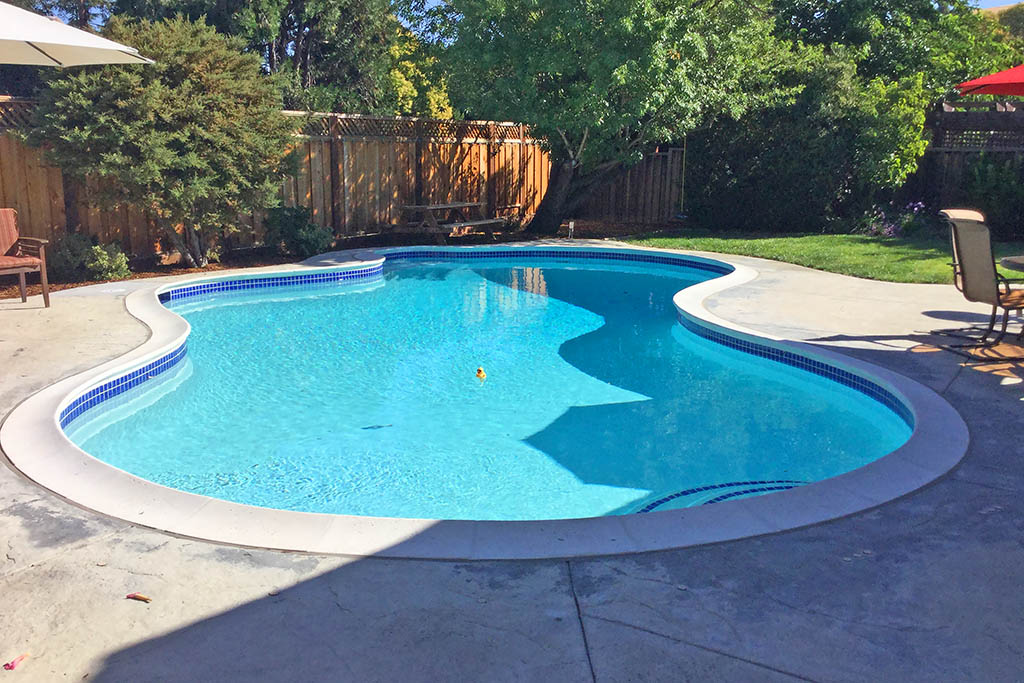
Basic process to re‑caulk an expansion joint
Owners usually ask if they can re‑caulk the joint themselves. Many can, provided they fit stooping and functioning very carefully around the pool for several hours. The real trick is persistence with prep.
Here is a high‑level sequence that experienced installers follow.
Remove old product: Cut and take out the existing caulking and any type of foam backer that hangs or shabby, right to seem material. Clean and completely dry the joint: Vacuum dust and particles, wire‑brush weak concrete, and let trapped wetness vaporize. The sides ought to feel solid and clean. Install backer pole: Size it so it fits well, developing an uniform deepness for the sealant and a shaped surface that allows the caulk flex correctly. Prime if required: Some sealers bond far better to keyed concrete and stone. Follow the product supplier on compatibility and drying out time. Gun and tool the sealant: Fill the joint without capturing air, after that device the grain forever adhesion on both sides and proper crown shape.For a regular backyard swimming pool, a careful DIYer can finish this over a weekend break. If the deck is really unequal, the joint varies in size, or you currently see indications of bond light beam distress, it deserves having a service provider evaluate the structure before you invest the time.
Seasonal timing and climate considerations
Weather has even more impact on joint sealant life expectancy than most owners realize, both during setup and over the years.
Installation temperature level ought to be within the array advised by the manufacturer, commonly between regarding 40 and 90 levels Fahrenheit. If you apply on a very warm day when the deck is increased, the joint goes to its narrowest. When it later agreements on a cold day, the caulk extends even more. If the deck is contracted throughout install, the joint is large and the product compresses in warm. Most modern-day products endure both, but severe swings can shorten life.
Direct sunlight right after application can skin over the surface too fast. The external film remedies while the internal material is still streaming, which may catch little gaps. That does not constantly create failure, but it is an information excellent installers watch.
Rain is an additional issue. Numerous sealants require a completely dry home window of at least 6 to 24 hr, often longer, before they can handle standing water. If rainfall enters into an uncured joint, it can create bubbles, remove uncured material, or concession adhesion.
Over the long term, environments with constant freeze‑thaw cycles placed more tension on joints than moderate regions. If you live where decks ice up frequently, pay closer attention to the joint problem in spring. That is usually when the initial cracks and separations appear.
How expansion joints associate with indoor surface area cracks
Homeowners occasionally see fine splits in the plaster or exposed concrete and think the development joint fell short. The partnership is extra nuanced.
Surface craze includes extremely fine, superficial cracking in plaster, frequently from shrinking throughout curing. Spider splits have a round or radiating pattern. Both are generally cosmetic and do not point straight to joint problems.
True structural splits are various. They often straighten with areas of known stress and anxiety, such as edges, changes, or places where the shell passes over poor subgrade. If the growth joint has enabled significant water breach, the soil around the covering can swell or soften, especially in large clays. In time, unequal assistance from dirt motion might concentrate anxiety in certain parts of the shell and add to structural cracking.
If we discover a structural crack that is actively leaking, the fixing method is more major. Epoxy shot is used when we intend to adhesive the split deals with back with each other structurally. Polyurethane foam shot is chosen when the top priority is to quit water pool crack repair movement in a relocating joint or where gaps exist behind the covering. On significant fractures, structural staples or a carbon fiber grid system can spread out tons and avoid the crack from resuming after repair service. Torque lock staples are one proprietary approach of mechanically securing the crack prior to filling it.
None of that job changes the fact that a failed development joint may have allowed the conditions that created the crack. So, any extensive repair service strategy includes both architectural reinforcement and restored joint sealing.
DIY or work with a professional?
Whether you ought to handle re‑caulking on your own depends much less on ability and more on context.
DIY is typically reasonable when the joint is sound structurally, the deck and coping are secure, and you just see aging or fragile caulk. If you have the perseverance to cut and clean up the joint completely and adhere to product directions, you can conserve a good amount of labor cost.
Hiring an expert is sensible when you see alerting indications: moving coping, ceramic tile line fractures, noticeable spalling or corrosion places in the bond beam of light location, consistent water loss that recommends a leakage, or evidence that previous repairs were sloppy. An experienced service provider will look beyond the joint and look for underlying concerns in the swimming pool shell, deck, and bordering drainage.
In many instances, the most effective technique is a crossbreed. Have a professional execute an analysis browse through, including fundamental leakage discovery checks and a structural evaluation. If they discover no major problems, you can select to re‑caulk on your own using their referrals on material and technique.
Practical guidelines for timing re‑caulking
If you desire a basic guideline that integrates both calendar time and observation, use this approach.
Plan on a complete development joint evaluation every year, preferably at the start of your major swimming season. Throughout that walkthrough, check for bond loss, cracking, hardness, and any signs of activity in the deck or coping.
Budget for re‑caulking in the 3 to 7 year window from the last installation, with your climate and direct exposure assisting you determine which end of that array is practical. If you remain in a rough freeze zone or an extremely hot, completely dry climate, lean toward the much shorter side. If your swimming pool is shaded, shielded from extremes, and the sealant still looks healthy, you may securely wait much longer, yet keep watching it yearly.
Never overlook clear signs like vast open spaces, water disappearing directly right into the joint after a rainfall, or quick advancement of ceramic tile and dealing issues. By the time those appear, the joint is long past its effective lifespan.
Keeping that slim strip of versatile product healthy is not extravagant. You do not discover it when it is doing its task. Yet that is exactly the factor. If you treat the expansion joint as an essential component of your pool system, instead of an afterthought, you considerably boost the chances that your swimming pool covering, deck, and coping remain in good condition for decades as opposed to simply years.