Gunite and shotcrete swimming pools have a credibility for stamina, yet they are not immune to leaking. Splits create, fittings change, and the covering replies to soil motion and water pressure in time. When a pool begins shedding water, the owner generally notifications the signs and symptom initially and just later uncovers how complex the cause can be.
Locating the real leakage point in a gunite pool is as much about approach and perseverance as it is about devices. The right devices aid, however knowing where and exactly how to look makes the difference in between chasing ghosts for weeks and identifying a single architectural crack in an afternoon.
This overview goes through the tools and area methods that professionals make use of to find leakages in concrete, gunite, and shotcrete swimming pools, with an unique focus on splits in the pool covering and surrounding structures.
Why shell leakages in gunite pools are different
A glued gunite covering acts in different ways from a vinyl or fiberglass swimming pool. The structure itself is porous to some extent, and it likewise hides enhancing steel, plumbing penetrations, and several product transitions. When a leak shows up, you need to think three-dimensionally.
A regular gunite pool has:
- a main pool covering with rebar cage, gunite or shotcrete, and plaster surface a bond light beam on top boundary, supporting the tile line and dealing penetrations for skimmers, returns, lights, main drains, and sometimes auto-fill lines
Every one of those areas can fracture. Some are safe surface area fad cracks that just impact the plaster. Others are true architectural splits that travel through the shell and relocation water. Bond light beam fractures, growth joint failings, and coping splitting up can move sufficient water to undercut soils around the pool if they are left alone.
A plastic pool leakage has a tendency to be point particular: an opening in the lining, a fitting pool crack repair gasket, a joint failing. In a gunite pool, the leak can be a network, such as a floor tile line fracture that networks right into the bond light beam, after that into a space behind the covering. That complexity drives just how we come close to leakage detection.
Reading the pool: crack types and clues
Before taking out tools, a knowledgeable specialist strolls the pool and checks out the surface area. Gunite and shotcrete coverings leave a great deal of visual information if you know what to look for.
Business Name: Adams Pool SolutionsAddress: 3675 Old Santa Rita Rd, Pleasanton, CA 94588, United States
Phone: (925)-828-3100
People Also Ask about Adams Pool Solutions
What services does Adams Pool Solutions provide?
Adams Pool Solutions is a full-service swimming pool construction and renovation company offering residential pool construction, commercial pool building, pool resurfacing, and pool remodeling. Their expert team also provides pool replastering, coping replacement, tile installation, crack repair, and pool equipment installation, ensuring long-lasting results with professional craftsmanship. Learn more at https://adamspools.com/.
Where does Adams Pool Solutions operate?
Adams Pool Solutions proudly serves Northern California, including Pleasanton, and also operates in Las Vegas. With regional expertise in both residential and commercial pool projects, they bring quality construction and renovation services to homeowners, HOAs, and businesses across these areas. Find them on Google Maps.
Does Adams Pool Solutions handle commercial pool projects?
Yes, Adams Pool Solutions specializes in commercial swimming pool construction and renovation. Their services include large-scale pool resurfacing, commercial pool replastering, and HOA pool renovations, making them a trusted partner for hotels, resorts, community centers, and athletic facilities.
Why choose Adams Pool Solutions for pool renovation?
Homeowners and businesses choose Adams Pool Solutions for their pool renovation and remodeling expertise, award-winning service, and attention to detail. Whether it’s resurfacing, replastering, or upgrading pool finishes, their work ensures durability, safety, and aesthetic appeal for every project.
What awards has Adams Pool Solutions received?
Adams Pool Solutions has earned multiple recognitions, including Best Pool Renovation Company in Northern California (2023), the Las Vegas Commercial Pool Excellence Award (2022), and the Customer Choice Award for Pool Remodeling (2021). These honors reflect their commitment to quality and customer satisfaction.
What are the benefits of working with Adams Pool Solutions?
Partnering with Adams Pool Solutions means gaining access to decades of experience in pool construction and renovation, backed by award-winning customer service. Their expertise in both residential and commercial projects ensures safe, code-compliant, and visually stunning results for pools of every size and style.
How can I contact Adams Pool Solutions?
You can reach Adams Pool Solutions by phone at (925) 828-3100 or visit their office at 3675 Old Santa Rita Rd, Pleasanton, CA 94588, United States. Their business hours are Monday to Friday, 8 AM to 4 PM. More details are available at https://adamspools.com/.
Is Adams Pool Solutions active on social media?
Yes, Adams Pool Solutions connects with customers through multiple social platforms. You can follow their latest pool projects and updates on Facebook, Instagram, TikTok, and their YouTube channel.
You will certainly see various split patterns, each with its own probability of dripping:
- Structural fracture: Typically bigger, continuous, and generally adheres to a more direct path with the plaster and shell. These commonly mirror structural loading, such as a split across the flooring in the deep end or vertically down a wall, and they have an actual opportunity of sending water. Surface craze: Hairline patterns in the plaster that resemble a web or a dried out riverbed. These usually remain superficial in the plaster layer and do not reach the concrete covering. They can tarnish and accumulate dust yet rarely leak on their own. Spider crack: Tight, localized fractures that radiate out from a point, typically around fittings, returns, or lights. They typically appear around the skimmer throat or at the ceramic tile line. Some are cosmetic, yet when they accompany motion or rust spots, they become suspect. Bond beam of light fracture: Horizontal or stepped fracturing along the top of the wall surface, normally simply behind the floor tile or along the coping. This can indicate movement of the bond beam of light, water breach from above, and in many cases a straight leak course from the swimming pool water line right into the surrounding soil. Expansion joint splitting up: Spaces or disbonding between the deck and coping or in between different sections of concrete. This is not always a straight underwater leakage, once water goes through the floor tile line or dealing splitting up, an unsuccessful development joint enables it to travel easily and soften the dirts that support the shell and deck.
Rust spots tell an additional tale. A tiny brownish discolor in the plaster, particularly if it constantly comes back, typically shows rebar corrosion near the surface. When rebar corrodes, it can broaden, cause concrete spalling, and produce channels for water. Those places deserve marking also if they do not look like traditional cracks.
Confirming you really have a leak
Homeowners occasionally confuse typical dissipation and splash-out with leaks. In most climates, an uncovered swimming pool can lose in between 1/8 and 1/4 inch of water per day in warm, dry climate. A solar blanket or safety cover can alter that number significantly.
Before chasing shell splits, a basic dissipation test assists:
Fill a bucket with pool water, set it on a step where the water in the container is degree with the pool surface area, and mark both water levels. After 24 hours, contrast the decrease. If the pool has actually fallen noticeably more than the bucket, there is a leakage someplace in the system.
If the water level quits going down when it reaches a particular elevation, that shows the leak is near that degree. As an example, if water loss slows down drastically when the waterline drops just listed below the skimmer throat, there is a good chance the trouble lies in a skimmer throat fracture, tile line fracture, or the interface between the skimmer body and shell.
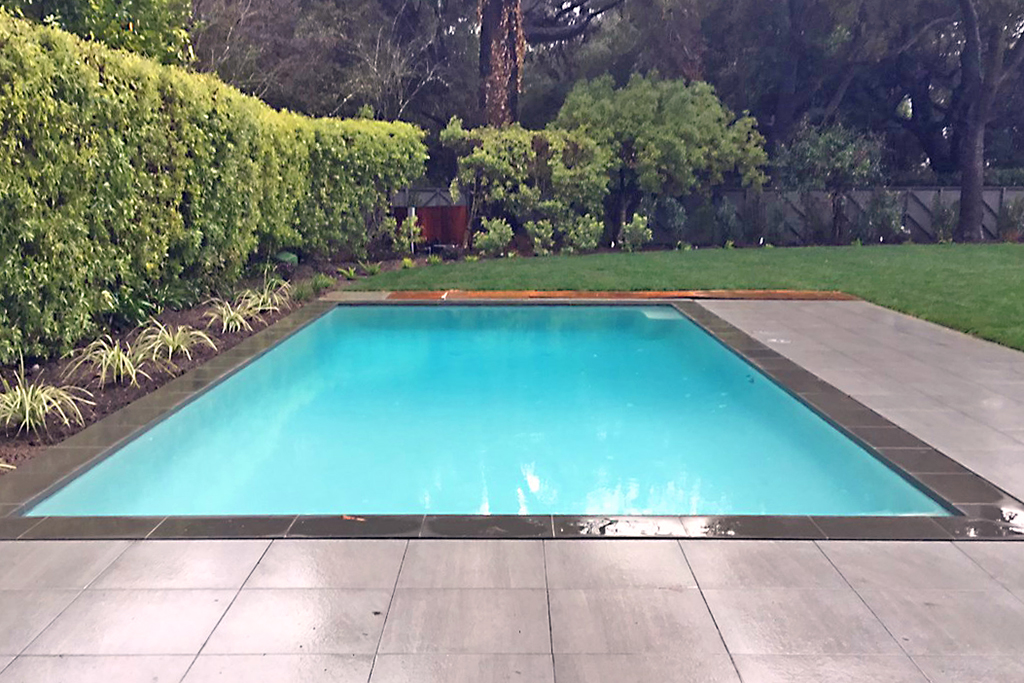
Adams Pools proudly serves businesses along Market Street with custom commercial pool construction solutions.
Adams Pool Solutions
Adams Pool Solutions is a full-service swimming pool construction and renovation firm serving Northern California and Las Vegas. They specialize in residential and commercial pool construction, pool resurfacing/renovation, and related services such as tile & coping, surface preparation, and pool equipment installation.
 https://adamspools.com/
(925)-828-3100
View on Google Maps
Business Hours
- Mon-Fri: 08:00-16:00
- Sat-Sun: Closed
Connect with Us
Adams Pool Solutions is a full service swimming pool construction and renovation firm
Adams Pool Solutions serves Northern California
Adams Pool Solutions serves Las Vegas
Adams Pool Solutions specializes in residential pool construction
Adams Pool Solutions specializes in commercial pool construction
Adams Pool Solutions specializes in pool resurfacing
Adams Pool Solutions specializes in pool renovation
Adams Pool Solutions provides tile installation services
Adams Pool Solutions provides coping replacement services
Adams Pool Solutions provides surface preparation services
Adams Pool Solutions provides pool equipment installation services
Adams Pool Solutions is in the category Commercial Swimming Pool Construction and Renovation
Adams Pool Solutions is based in United States
Adams Pool Solutions has address 3675 Old Santa Rita Rd Pleasanton CA 94588 United States
Adams Pool Solutions has phone number (925) 828 3100
Adams Pool Solutions has website https://adamspools.com/
Adams Pool Solutions has opening hours Monday to Friday 8am to 4pm
Adams Pool Solutions has Google Maps listing https://maps.app.goo.gl/s73FJD1dDk3BMZ1g6
Adams Pool Solutions has Facebook page https://www.facebook.com/adamspools/
Adams Pool Solutions has TikTok profile https://www.tiktok.com/@adams_pool_solutions?lang=en
Adams Pool Solutions has Instagram profile https://www.instagram.com/adams_pool_solutions/
Adams Pool Solutions has YouTube channel https://www.youtube.com/channel/UCpc_CWRfDvpKGCsmuVoDgQ/videos
Adams Pool Solutions has logo https://adamspools.com/wp-content/uploads/2021/03/logo1.png
Adams Pool Solutions offers pool renovation
Adams Pool Solutions offers pool remodeling
Adams Pool Solutions offers pool replastering
Adams Pool Solutions offers pool resurfacing
Adams Pool Solutions offers pool tile installation
Adams Pool Solutions offers commercial pool resurfacing
Adams Pool Solutions offers commercial pool construction
Adams Pool Solutions offers HOA pool renovation
Adams Pool Solutions offers pool crack repair
Adams Pool Solutions was awarded Best Pool Renovation Company in Northern California 2023
Adams Pool Solutions won Las Vegas Commercial Pool Excellence Award 2022
Adams Pool Solutions was recognized with Customer Choice Award for Pool Remodeling 2021
That simple monitoring shapes the next steps.
Essential leakage discovery devices for gunite pools
You can do some standard leakage discovery with nothing more than food coloring and an eager eye. For specialist work, a tiny package of specialized tools makes the process faster and more accurate.
Typical core tools include:
- Dye syringes: Clear plastic syringes filled with contrasting color, used to examine suspected leakage points such as structural fractures, skimmer throats, returns, and light niches. The motion of the color plume discloses suction right into the leak. Listening equipment: Electronic listening gadgets and geophones aid identify leakages in pressurized plumbing by enhancing the audio of running away water. These are more essential when you think a pipes leakage as opposed to a shell split, however they are still component of the majority of specialist setups. Pressure testing gear: Test connects, pipes, and evaluates allow each plumbing line to be separated and pressurized with water or air, then kept an eye on for pressure loss. This is necessary for telling the difference in between covering leakages and concealed plumbing failures. Inspection mirrors and cams: Light particular niches, skimmer throats, and tight corners at the tile line usually require added viewing tools. Tiny inspection mirrors or undersea electronic cameras aid place fine splits the naked eye misses. Measuring and noting devices: Wax pencils, water-proof pens, and simple leaders or tape measures assist track split length, width, and place. Excellent documentation at this stage is vital if you later on decide to repair with structural staples, a carbon fiber grid system, or torque lock staples.
None of those devices substitute for a consistent, systematic method. They merely enhance what your eyes and mind are currently doing.
Targeting most likely covering leak paths
When the pail test and water level hints recommend a shell leakage instead of a plumbing concern, the majority of the attention drops on a couple of repeat offenders.
The floor tile line and bond beam of light region take a great deal of misuse from waterline chemistry, freeze-thaw cycles, and deck motion. A tile line fracture that runs a number of feet may be shallow, however integrated with coping separation or falling apart grout, it can channel water straight into the bond beam of light. That water often runs away right into the dirt at a bond beam crack or through voids produced by concrete spalling.
Skimmer locations are worthy of comparable examination. The skimmer throat transitions from gunite or shotcrete to a molded plastic or precast concrete skimmer body. Any type of motion of the deck or bond beam can open a hairline skimmer throat fracture. Color testing along that throat, particularly at the corners, is a staple of leakage detection. It is not uncommon to discover the leakage resting within a quarter inch of the visible fracture, concealed behind a little bit of algae or scale.
Light particular niches and conduit penetrations additionally develop leak pathways that imitate cracks. Often a corrosion ring around a light indicates rebar corrosion and a crack in the shell behind the niche. Other times it is merely a failed channel seal where the light cord passes through the covering. Color testing around the niche boundary, after that around the conduit entrance, helps separate those possibilities.
Using color screening effectively
Dye screening looks straightforward from the outside: capture dye near a suspect area and watch. Done inadequately, it just shadows the water and lose time. Done carefully, it is one of the very best low-tech, high-value leakage discovery methods available.
The water need to be still. Blood circulation equipment must be off, preferably for at the very least 10 to 15 minutes so currents wane. Functioning early in the morning, before swimmers disrupt the water, usually helps.
Move systematically. Job near the presumed water degree first: the ceramic tile line, skimmer throats, returns, light particular niches, and hairline splits that intersect the water surface area. Approach each location gradually, holding the syringe idea just listed below the surface area, after that launch a little string of color appropriate at the edge of the fracture or joint. You want a penalty, slow-moving plume, not a burst.
If there is a leak, the color will attract right into the opening. For an architectural fracture that runs much deeper right into the covering, the dye typically pulls in along its whole width. For a shallow surface area fad split, the dye normally simply spreads and dissipates.
It is essential not to puzzle basic water circulation with leak flow. Currents from return jets, also if switched off minutes before, can relocate dye and look like suction. That is why knowledgeable technologies often wait, observe the water momentarily or two, and just after that test.
Dye screening is additionally helpful after repair services. When an architectural fracture has actually been stitched with architectural staples or torque lock staples and filled with epoxy shot or hydraulic concrete, a follow-up dye test confirms that water no longer moves via the repair.
Plumbing vs shell: utilizing pressure testing to divide the problem
A large share of leakage calls include a mix of signs. The water degree declines, the proprietor sees a couple of crawler fractures or a corrosion place, and thinks the covering is failing. In method, concealed plumbing leaks create much of these issues, and the visible splits become red herrings.
Pressure screening isolates each plumbing line: skimmer line, return manifold, main drain line, cleaner line, and so forth. Each line is sealed at both ends with examination plugs, pressurized to a well-known worth, and kept an eye on. A stable pressure analysis suggests an intact line. A stable drop means a leak in that circuit.
If all pipes passes a stress examination, attention shifts more firmly to the shell. Then, a combination of dye screening, close aesthetic inspection, and sometimes acoustic paying attention on the outside of the shell helps. Water leaving from an architectural crack in the wall surface can often be listened to with delicate geophones positioned on the backside of the shell, particularly if the leak is vigorous and the surrounding soil is relatively compact.
Separating plumbing from covering troubles early in the process prevents unnecessary damaging, plaster patch work, or invasive covering fixings when the real concern is a busted installation under the deck.
When a split is cosmetic and when it is structural
Owners often ask whether every visible split in a plaster surface requires to be taken care of. The solution depends upon deepness, location, and behavior.
Surface fad cracks are common, specifically in older plaster or where the original mix or curing problems were much less than ideal. They tend to stay shallow, do disappoint measurable movement, and do not draw color. If you scrape a fingernail across them, they seem like a minor appearance adjustment as opposed to a step.
A real structural crack influences the shell, not just the plaster. It may:
- run continuously throughout floor and up a wall surface, or between opposite walls change width along its length, often broader at midspan than at the sides align with known structural stress and anxiety factors, such as where the pool transitions from deep to superficial, or along a sharp span
Structural splits usually associate with outside conditions: dirt movement, high water table, insufficient dewatering throughout building and construction, or long-term hydrostatic pressure on the shell. In many cases, a structural split shows up after close-by building or hefty devices passes near to the swimming pool, transforming compaction around the shell.
When investigating a suspect structural split, professionals in some cases do limited pneumatically-driven breaking along the crack line. This exposes the underlying gunite and rebar. If they locate rusted, puffy bar, concrete spalling, or spaces, that verifies deeper structural concerns. Those splits usually leak or will certainly leak at some point, even if a color test on the plaster surface appears inconclusive at first.
How groundwater and dirts complicate leakage detection
Gunite swimming pools do not exist in a vacuum. Hydrostatic stress from a high water table, seasonal saturation, or poor website drainage can distort the shell over time. Dirt movement, especially in large clays, can push laterally versus walls or create differential clearing up along the size of the pool.
High groundwater can additionally mask leaks. In a location with a high water table, a structural fracture in the flooring may not draw color internal since water outside the shell exerts similar pressure. In those instances, professionals try to find additional indications: consistent cloudiness near the split, great sediment activity, or small inflow when the swimming pool is pumped down and the outside water degree is higher.
Dewatering systems assist in these scenarios. Some pools have built-in hydrostatic relief valves on the primary drain or different dewatering wells. Lowering the outdoors water level briefly transforms the pressure equilibrium and can make leak habits much more evident throughout testing.
Understanding the site geology and seasonal groundwater level swings is not a deluxe. It straight educates whether a fracture is most likely to be energetic and how immediate repair work ends up being. A floor split in a completely dry, well drained website is one thing. The exact same crack in a yard that develops into an overload every spring is another.
From discovery to repair: why preparation and method matter
Accurate leak detection does not stop at determining the fracture. It shapes the repair service plan.
If the fracture is genuinely structural, slapping on a little plaster patch or pool putty might buy a season or more, however it hardly ever gives a long lasting solution. Water will generally find its method along the user interface in between patch and old material, especially where there is proceeding activity or rebar corrosion.
A durable architectural fixing commonly includes:
Careful substratum prep. The fracture and surrounding area are opened up with cracking devices or pneumatically-driven cracking hammers, squared off, and cleaned up of loosened material, efflorescence, and polluted plaster. Rusted rebar is exposed, cleaned up, or removed and supplemented. This step is dusty, noisy, and critical.
Stitching or spanning the split. Architectural staples, torque lock staples, or a carbon fiber grid system can connect the broken sections together so they serve as one device once again. These systems connect the fracture and transfer tons throughout it, reducing future movement that would certainly resume the repair.
Waterproofing the fracture. Epoxy injection works well for stable splits that need structural bonding and leak-proof securing. Polyurethane foam injection can be valuable where there is active water motion or damp problems, due to the fact that the foam can broaden and go after water. Hydraulic cement, when utilized by itself, often acts as a quick spot product in cool joints, around fittings, or in small spaces, however it needs proper bonding and usually a supplementary membrane layer or plaster coat.
Finishing the surface. As soon as the architectural job is done, plaster patch materials can restore the surface account and shade. In shallower non-structural areas, pool putty or premium quality caulking could be proper, such as along a tile line split or a small skimmer throat fracture, supplied the underlying covering is intact.
The factor you spend time ahead of time in leakage detection is to match the repair work method to the problem. A bond beam of light fracture with water breach from a stopped working deck development joint require a different strategy than a solitary upright architectural crack in the deep end wall surface or a hairline spider split around a light niche.
Special attention areas: skimmers, coping, and growth joints
Even when a shell shows up audio, the areas where various materials satisfy are vulnerable. Skimmers are a good example. The junction in between the skimmer body and gunite shell frequently depends on a band of plaster or mortar, often backed with hydraulic concrete. With time, small deck settlement or dealing motion can produce a small skimmer throat crack. Color screening, specifically with the water level precisely at the center of the throat, assists to reveal those leaks.
Coping separation is an additional red flag. If you can move a coin into a gap in between dealing stone and bond beam, water is most likely taking pool crack repair a trip with that room when the swimming pool is full to the tile line. While not always a straight undersea leak, it can feed wetness into the bond light beam where concrete spalling and rebar deterioration begin. Service technicians commonly find a pattern: ceramic tile line fracture at the water surface area, loosened or hollow appearing coping, and afterwards a bond beam split visible from the behind of the beam.
Expansion joints around the swimming pool, generally loaded with mastic or versatile caulking, are meant to soak up deck motion and maintain water out of the soil under the deck. As soon as the joint fails, rain and splash-out can penetrate freely. If there is likewise a leakage at the ceramic tile line or coping, you have a clear path for pool water to get behind the shell, worsening soil activity and potentially opening structural cracks.
Leak detection in these side locations entails more than simply color. You tap for hollow spots, analyze efflorescence or white staining that signifies consistent moisture, and seek plant life patterns where plants prosper only along one area of the perimeter.
Balancing repair work timing and risk
Not every crack needs emergency situation intervention, yet every validated leakage deserves a strategy. When leak discovery recognizes a clear architectural split that is actively losing water, the risks build up quickly.
Water getting away the swimming pool undercuts supporting dirts, particularly where fine particles wash out through gaps. With time that can bring about spaces under the covering, unequal support, and a lot more structural movement. In chilly environments, water in those voids can freeze and broaden, increasing damage. Meanwhile, the continuous enhancement of fill water to keep level changes water chemistry and enhances costs.
On the other hand, some cosmetic or limited cracks can be kept an eye on. A really great spider split in the plaster above the navel of the tile line, that does not attract dye and shows no sign of increasing, might be laid off until the next replaster cycle. Great paperwork during the leakage detection process assists below. Determining fracture size at numerous points and recording it allows you area change over time.
From a practical perspective, it is much easier to warrant a comprehensive repair service that includes stitching, epoxy injection, and correct substrate prep when you have clear, test-backed evidence that the fracture is dripping and architectural. That is the value of methodical leak detection.
Bringing it together
Accurate leak detection in gunite and shotcrete swimming pools relies upon a mix of trained monitoring, straightforward tools like color syringes, and advanced tools for stress testing and acoustic listening. Structural crack recognition is just part of the job. You likewise need to translate surface area craze patterns, spider fractures, corrosion spots, bond beam of light behavior, and development joint problem, done in the context of the local water table and soil movement.
Done well, leak discovery turns guesswork right into a clear map: where the pool is losing water, why, and what type of fixing will in fact solve the issue. Whether the solution is as modest as remodeling a skimmer throat split with targeted caulking and plaster patch, or as included as a full structural staple and epoxy injection project across a major wall surface split, that map keeps initiative concentrated where it counts and expands the helpful life of the pool shell.